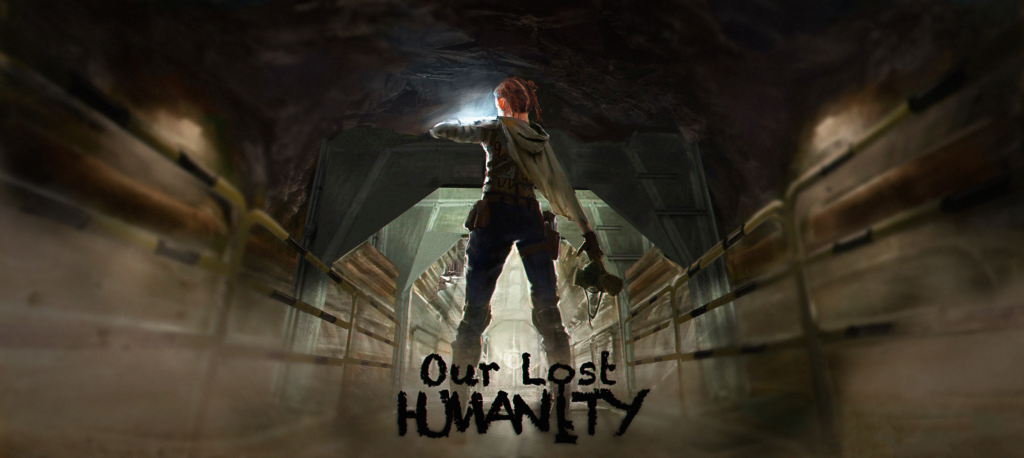
A self-sufficient inventor searching for a safe place to call home in an apocalyptic wasteland ventures deep into a forgotten water purification plant, where she must face the past – not only her own.
Our Lost Humanity is a narrative adventure puzzle game set in a post-punk, post-apocalyptic world. The game is developed by 26 people in total and I’m a part of the design team. I’m mainly responsible for designing the game vision and gameplay feel, documentation maintanance as well as implementing the narrative mechanics and beats in Unreal Engine 5.
My role and goal
Our Lost Humanity is a game about solving puzzles and reconstructing the past events by interacting with the environment. Joining an already established team on an advanced phase of the project, my role was to take ownership of the game’s certain narrative features and ensure they stayed well-documented.
As the most technically-oriented designer on the project, one of my responsibilities was to bridge the gap between designers and programmers. My aim was to craft systems both intuitive for non-technical people and easy to maintain and scale later in development.
Journal
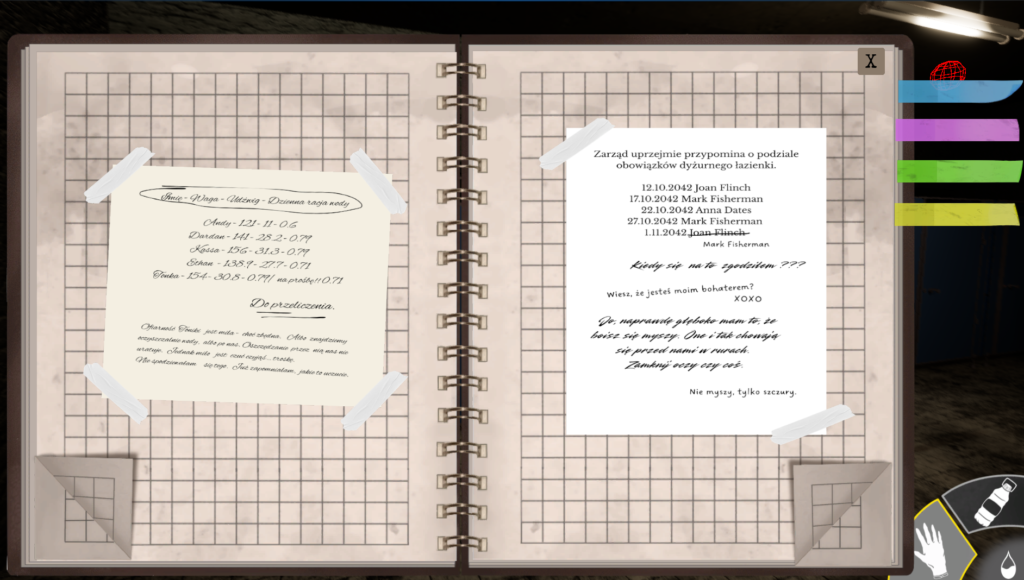
One of the core mechanics I was working on, and one I’m the most proud of, is the journal. It was the first major task I was given upon joining the team and given ownership of. Before starting to draft it, I thoroughly discussed it with the team and created a list of requirements for the system. I figured out the most effective way to structure this kind of system would be to create a data driven architecture with a custom DataAsset for each journal entry. As the game is focused on narrative and the reconstruction of past events, I created a collectible-like system, where each entry had its specified index in the journal and would appear on that page, regardless of the order they were found in the game. This solution was approved by the design team, but turned out to be unintuitive for the players who tested the game without knowing the system and its assumptions.
Therefore, I redesigned the system: instead of showing the entries in a fixed order, they would appear in the journal under their own categories and in the order the player found them. Despite being simple in its core, this change required rebuilding almost the whole system and handling the way the data was displayed – but this iteration was crucial for the quality improvement of this mechanic.
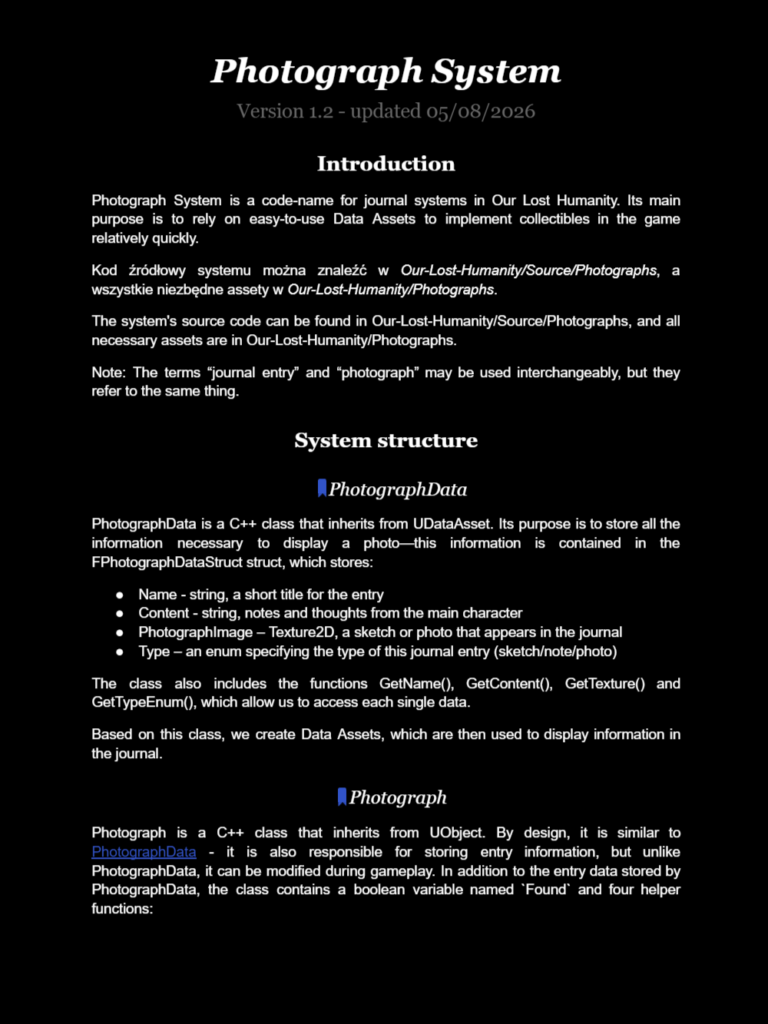
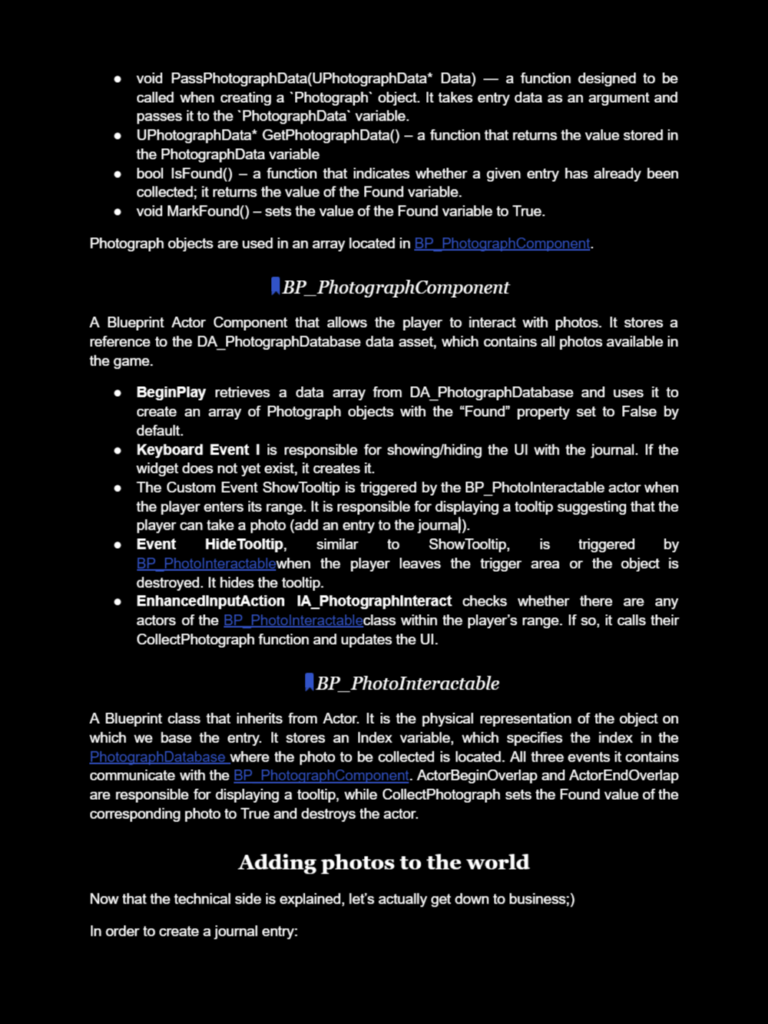
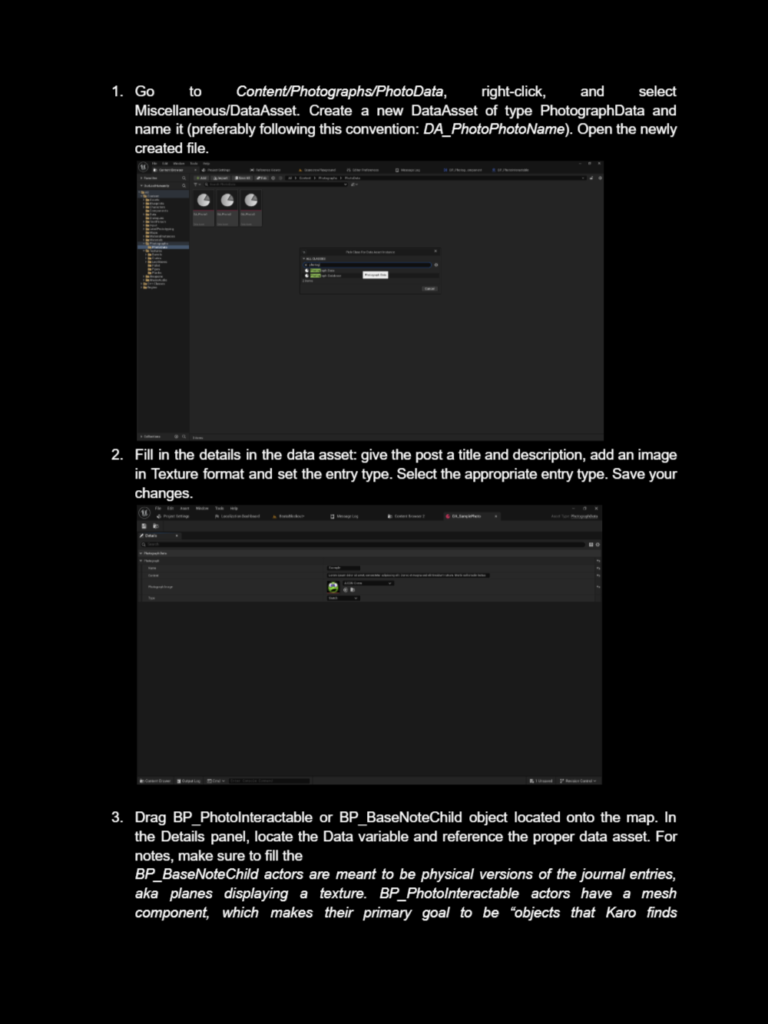
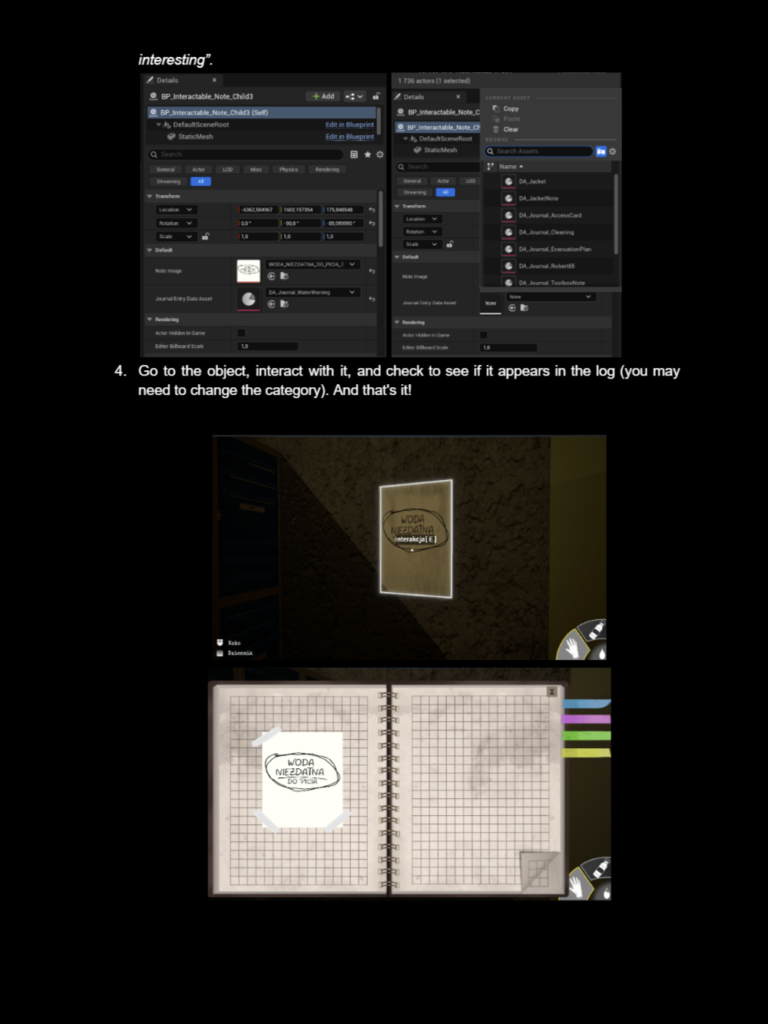
Additionally, I made sure the documentation would stay up-to-date, accessible and informative for the whole team. I divided it into two parts, the first being a technical deep dive into how the system is built and the second a simple tutorial on how to implement journal entries into the game. It was warmly received by the team and proved to work.
AGH Games Hall
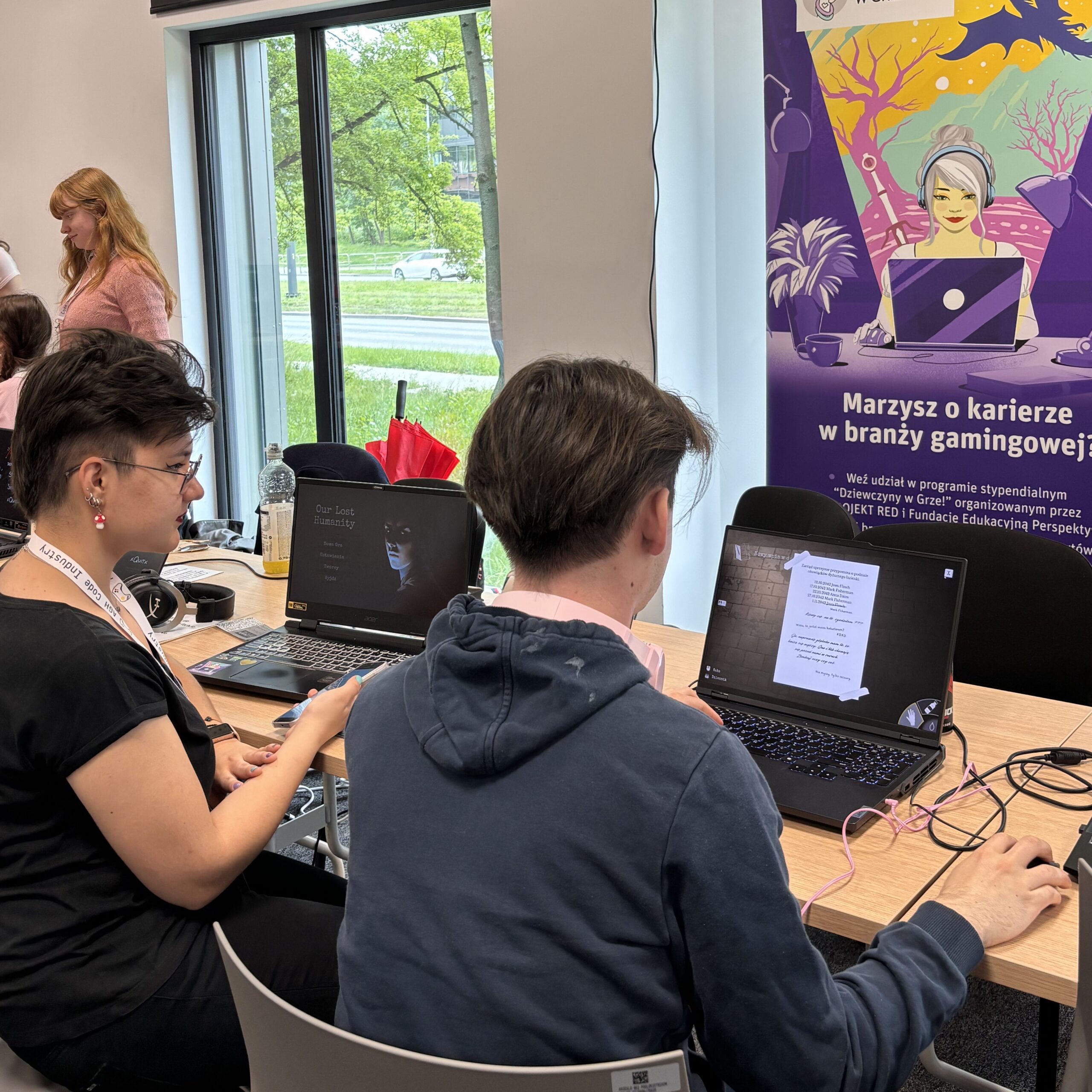
The game was first playtested by a large group of players during AGH Games Hall, an independent game expo organised by the academic circle I’m now a board member of. The game was generally warmly received, with the players especially enjoying the narrative part of the game. We received a lot of valuable feedback on it, and as a part of the design team, my task was to decide how to apply that feedback into our game. The demo level turned out to be a bit confusing for some players, which led us to discussions about the game’s legibility and rewarding the player’s progress. I also implemented numerous fixes to the journal system, as described above.
AGH Games Hall was also a great opportunity to see the players’ reactions to the game, and see how they play it in the way that was not expected by anybody in the team. It gave me a great insight into what to focus on more while designing gameplay systems.